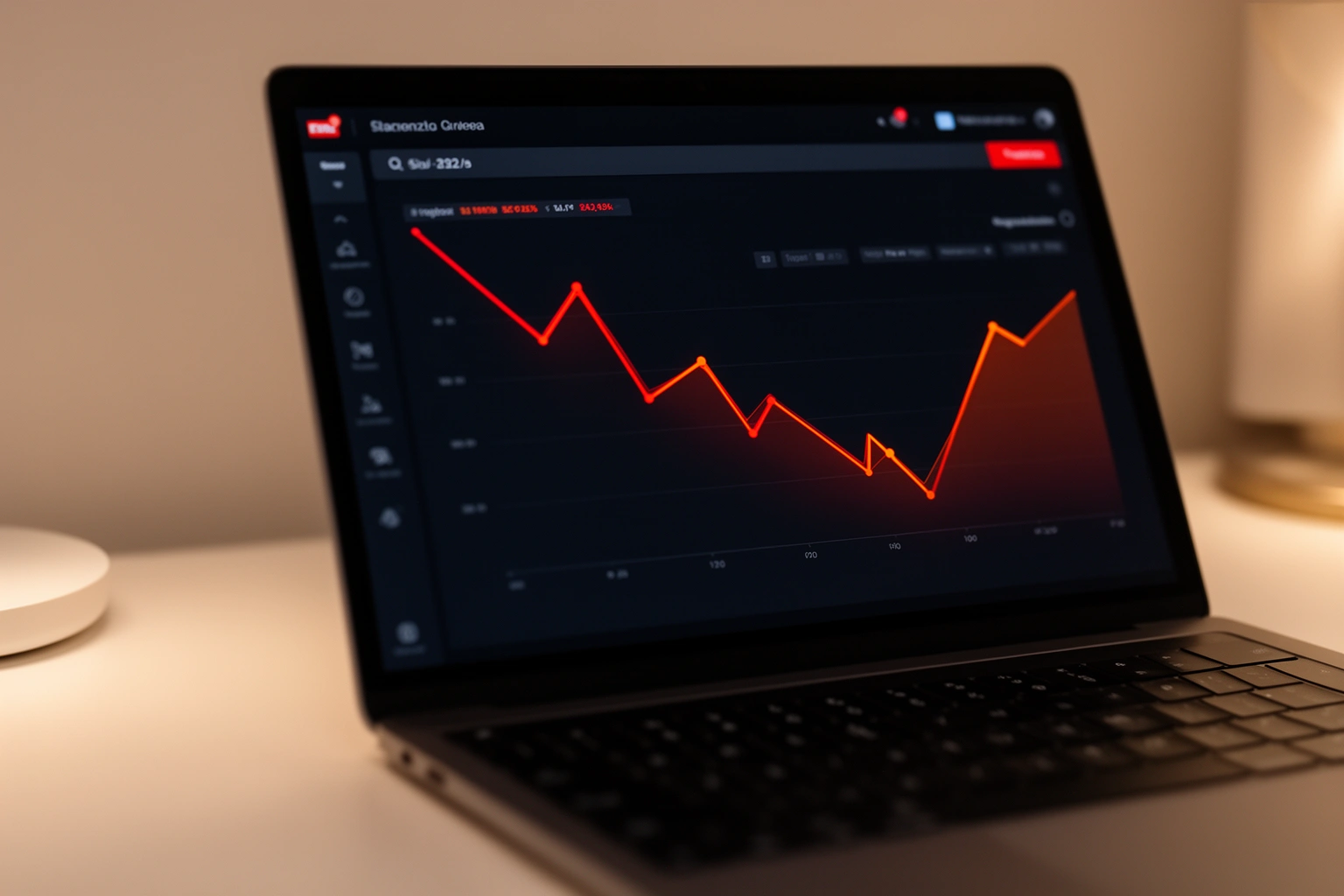
You wake up, open Google Analytics, and the traffic line has fallen off a cliff. Nothing changed on your site. No errors in Search Console. No manual action notifications. Just a sudden, unexplained drop that coincides with a Google update announcement you saw on Twitter the day before.
This is one of the most disorienting experiences in SEO, and it happens to sites of every size and quality level. Understanding why it happens, what Google is actually measuring, and what separates recoverable drops from permanent ones is the difference between a useful response and wasted effort.
This guide covers every significant cause of update-related traffic loss, how the current Google ranking environment works in 2025 and 2026, and what recovery actually looks like. For a related angle on how the broader web privacy landscape affects discoverability, the comparison of private search engines covers how traffic sources are shifting beyond Google.

The Core Misunderstanding: Updates Are Not Penalties
The single most important thing to understand about algorithm-related traffic loss is that most ranking drops are not penalties. Google itself states this clearly: a core update adjusts how Google evaluates content across its entire index. If your site loses rankings after a core update, Google has not taken action against you. It has re-evaluated the relative quality of every page in its index and concluded that other pages now better satisfy the search intent for the queries you were ranking for.
Penalties are different. A manual action, visible in Google Search Console under Security and Manual Actions, means a human reviewer at Google has determined your site violates spam policies. These are issued for specific violations: cloaking, hidden text, unnatural link schemes, scraped content, and similar deliberate manipulations. Manual actions are rare, disclosed, and accompanied by a notification.
Algorithmic demotions carry no notification. They happen silently as ranking systems recalibrate. The practical test is simple: if you see a traffic drop that correlates with a known Google update date and no manual action appears in Search Console, you are dealing with an algorithmic reassessment, not a penalty. The recovery path for each is entirely different.
Why Core Updates Drop Traffic: The Main Causes
Core updates don’t target specific violations. They adjust the weighting of quality signals across Google’s ranking systems. Sites lose traffic for several distinct reasons, and identifying which applies to your situation determines what to do about it.
Content That Was Written for Rankings, Not Readers
Google’s Helpful Content system, which was originally launched as a standalone update in 2022 and integrated permanently into Google’s core algorithm in March 2024, evaluates whether content was created primarily to rank in search or primarily to help the person searching. These are not the same thing, and Google has become significantly better at distinguishing them.
Content that demonstrates this problem includes: articles that answer every possible related question to capture long-tail keywords without genuine depth on any of them; pages that lead with the keyword-stuffed answer Google wants to see but contain no actual useful information below it; and guides that technically cover a topic but offer nothing a user couldn’t get from the first three results already ranking for it.
The December 2025 core update and subsequent March and May 2026 updates reinforced this evaluation across a wider category of content. E-E-A-T, which stands for Experience, Expertise, Authoritativeness, and Trust, used to apply primarily to health and finance content. By late 2025, Google had expanded these requirements to effectively all competitive searches including e-commerce reviews, SaaS comparisons, and how-to guides. Sites producing surface-level content on topics outside their genuine expertise lost rankings at scale.
Thin Content and Scaled Content Abuse
Thin content refers to pages with low informational value relative to what competing pages offer for the same query. A 400-word article on a topic where the top-ranking results average 2,000 words of genuine depth is thin not because of word count but because of information density.
Scaled content abuse, a separate but related issue, refers to high-volume content production using templates or AI generation without meaningful editorial oversight, producing pages that look different from each other but offer the same generic information. Google’s spam policies were updated in 2024 to explicitly address this, and enforcement through both spam updates and core updates has continued through 2025 and 2026.
The important nuance: AI-generated content is not automatically penalized. An Ahrefs study of 600,000 pages published in July 2025 found essentially no correlation between AI content detection scores and ranking changes. What Google penalizes is content that is generic, padded, and produced without quality review, regardless of how it was generated. Thoroughly edited, genuinely informative content that happens to use AI in production passes the same quality bar as human-written content of equivalent value.
E-E-A-T Signal Weakness
Experience, Expertise, Authoritativeness, and Trust are evaluated at both the page level and the site level. Pages that lack clear author attribution, sites that have no identifiable subject matter expertise, and content that presents information without any signal of first-hand experience are increasingly disadvantaged against competitors who demonstrate these signals clearly.
First-hand experience has become the differentiating factor that Google has most actively elevated since 2023. A product review written by someone who tested the product and describes specific findings performs significantly better than a review that summarizes manufacturer specifications and competitor reviews. A guide written by someone who has solved the problem they’re describing outperforms a guide assembled from other guides. Google measures engagement signals like dwell time, scroll depth, and return visit rates, and pages where users immediately return to search results send a strong negative signal about whether the content actually helped.
Technical Performance Below Competitive Threshold
Core Web Vitals have been a ranking signal since 2021, but the weighting has increased over successive updates. Analysis of sites affected by the December 2025 core update found that pages with a Largest Contentful Paint score above 3 seconds experienced 23% more traffic loss than faster competitors with equivalent content quality. Pages with poor Interaction to Next Paint scores above 300 milliseconds showed 31% drops, particularly on mobile.
Technical performance matters most when content quality is roughly equal between competitors. A site with significantly better content than its competitors can absorb some technical debt. A site at parity with competitors on content quality will lose rankings to the faster, cleaner option. As content quality rises across the web, technical differentiation becomes more consequential.
Backlink Profile Issues
Spam updates, which run separately from core updates, target manipulative link patterns: purchased links, private blog networks, reciprocal link schemes, and sudden unnatural spikes in link acquisition. If a traffic drop coincides with a spam update rather than a core update, the backlink profile is the more likely culprit.
Google’s ability to identify and discount low-quality links has improved substantially. Sites that built rankings on link schemes rather than genuine editorial coverage find those rankings increasingly unstable as each spam update refines the detection. The March 2026 update ran a spam update simultaneously with a core update, creating compounded volatility for sites with both content quality issues and link profile problems.
Competitor Improvement
Not every traffic drop reflects a problem with your site. Core updates can cause your rankings to fall because a competitor improved significantly, not because you declined in absolute terms. Google’s ranking is relative: if the pages competing for your keywords got substantially better between updates while yours stayed the same, your position falls even with no change to your content.
This is the most frustrating cause of traffic loss because it means doing everything right isn’t sufficient. Maintaining rankings requires continuous improvement relative to competitors, not simply meeting a static quality bar.
AI Overviews and Zero-Click Search
A separate category of traffic loss has emerged independently of ranking changes. Google’s AI Overviews, which generate a synthesized answer at the top of the SERP for many queries, reduce click-through rates even for sites that rank in position one. Users who find their answer in the AI Overview have no reason to click through to the source page.
This means rankings can remain stable while traffic falls. Sites saw this pattern clearly in 2025: Google Search Console impressions and average position unchanged, but clicks declining because the SERP itself was delivering the answer without a click. This is not a recoverable situation through content improvement. It reflects a structural shift in how Google presents information for certain query types, particularly straightforward informational searches.
The queries most affected by AI Overviews are simple factual questions, definitions, and how-to tasks with short answers. Queries requiring nuanced judgment, personal experience, opinion, or complex step-by-step guidance are less likely to be fully resolved by an AI Overview, making them more valuable traffic sources going forward.

How to Diagnose the Cause of Your Traffic Drop
Before attempting recovery, identifying which cause applies matters. A content quality issue requires a different response than a technical performance issue or a link profile problem.
The first step is correlating the drop with a specific update. Google’s Search Status Dashboard at status.search.google.com records confirmed updates with dates. Cross-reference your traffic drop in Google Analytics with the update timeline. If the drop aligns with a core update, content and E-E-A-T are the primary investigation areas. If it aligns with a spam update, review your backlink profile in Google Search Console and Ahrefs or Semrush for unnatural link patterns.
In Search Console, check the Performance report for changes in impressions, clicks, and average position. A drop in impressions with stable position suggests your pages were de-indexed or significantly demoted. A drop in clicks with stable impressions and position suggests AI Overviews are absorbing traffic. A drop in position with stable impressions is a straightforward ranking change.
Identify which specific pages lost the most traffic. Check whether those pages share characteristics: thin content, no clear author, generic information without original insight, slow loading times. The pattern across your worst-affected pages tells you what to prioritize.
Recovery: What the Evidence Shows
Recovery from core update traffic loss is possible but not guaranteed quickly. Based on patterns tracked across sites affected by the 2024 and 2025 core updates, sites that made significant content improvements typically saw partial recovery within two to six months, usually aligning with the next major core update. Full recovery often takes six to twelve months.
The sites that recovered demonstrated consistent patterns: they identified the specific pages most affected, improved the depth and first-hand experience demonstrated in those pages, strengthened author and expertise signals, and addressed technical performance issues. Sites that responded by increasing publishing volume without improving individual page quality did not recover.
Sites affected by the Helpful Content system have shown harder recovery curves. SEO researcher Glenn Gabe tracked over 380 sites severely impacted by the September 2023 update and found that most did not recover fully within the following year even after making improvements. The classifier that evaluates site-wide content quality appears to require sustained evidence of improvement before lifting the signal, not just individual page fixes.
For sites building long-term search visibility, the consistent conclusion across every major update since 2022 is the same: content that demonstrates genuine expertise, serves a specific audience’s actual needs, and provides something competitors don’t is more durable than content optimized against ranking signals. Understanding how tracking and identity systems work helps context the broader shift toward first-party data and direct relationships with audiences as a hedge against search dependency. More on building sustainable online visibility is covered across coomer.org.uk.
Frequently Asked Questions
Why did my website lose traffic after a Google update?
Most traffic drops after Google updates are algorithmic reassessments, not penalties. Google recalibrates its quality signals across the entire index. Your page may drop because competitors improved, your content quality fell short of new standards, or technical performance lagged behind competing pages.
Does a traffic drop after a Google update mean I was penalized?
No. Core updates adjust how Google evaluates content overall. Manual penalties are separate, disclosed in Google Search Console under Security and Manual Actions, and are issued for specific spam policy violations.
What is E-E-A-T and why does it affect rankings?
E-E-A-T stands for Experience, Expertise, Authoritativeness, and Trust. It is a framework Google uses to evaluate content quality. Since the December 2025 core update, it applies to virtually all competitive content, not just health and finance.
Can rankings stay the same but traffic still drop?
AI Overviews display a synthesized answer at the top of the SERP. Users who find their answer there have no reason to click through to source pages. This reduces click-through rates even for sites that maintain their rankings.
How long does it take to recover traffic after a Google core update?
Sites that made significant content improvements typically saw partial recovery within 2 to 6 months, usually aligning with the next major core update. Full recovery often takes 6 to 12 months.
How do I know which Google update caused my traffic drop?
Use Google’s Search Status Dashboard to correlate the drop with a known update date. In Search Console, check which pages lost impressions or clicks, and whether the pattern points to content quality, technical performance, or backlink issues.
Does Google penalize AI-generated content?
No. An Ahrefs study of 600,000 pages found essentially no ranking correlation with AI content detection scores. Google penalizes generic, scaled content without editorial oversight, regardless of how it was produced.
What is thin content and why does it lose rankings?
Thin content refers to pages with low informational value relative to competing pages for the same query. It is not about word count but about information density and whether the page genuinely addresses the user’s question.
How do backlinks cause traffic loss after updates?
Spam updates specifically target manipulative link patterns including purchased links, private blog networks, and unnatural link spikes. If your drop coincides with a spam update rather than a core update, review your backlink profile.
How much does page speed affect rankings after a core update?
Sites with Largest Contentful Paint above 3 seconds experienced 23% more traffic loss than faster competitors with similar content after the December 2025 core update. Technical performance has become a tiebreaker when content quality is comparable.