The best fleet tracking software for small businesses gives owners clear vehicle location, route history, geofence alerts, and driver activity without burying them in enterprise dashboards. I have worked with GPS trackers on service vehicles long enough to know the real problem usually is not missing data. The problem is buying too much software for a five-van company.
A small plumbing, HVAC, landscaping, delivery, or security team needs fast answers. Where is the van? Did the driver reach the job site? Why did a truck leave the yard after closing?
Large platforms like Samsara, Geotab, Verizon Connect, and Motive can handle deeper fleet operations. Smaller teams often get better value from a simple GPS tracker or lightweight GPS fleet tracking software setup.
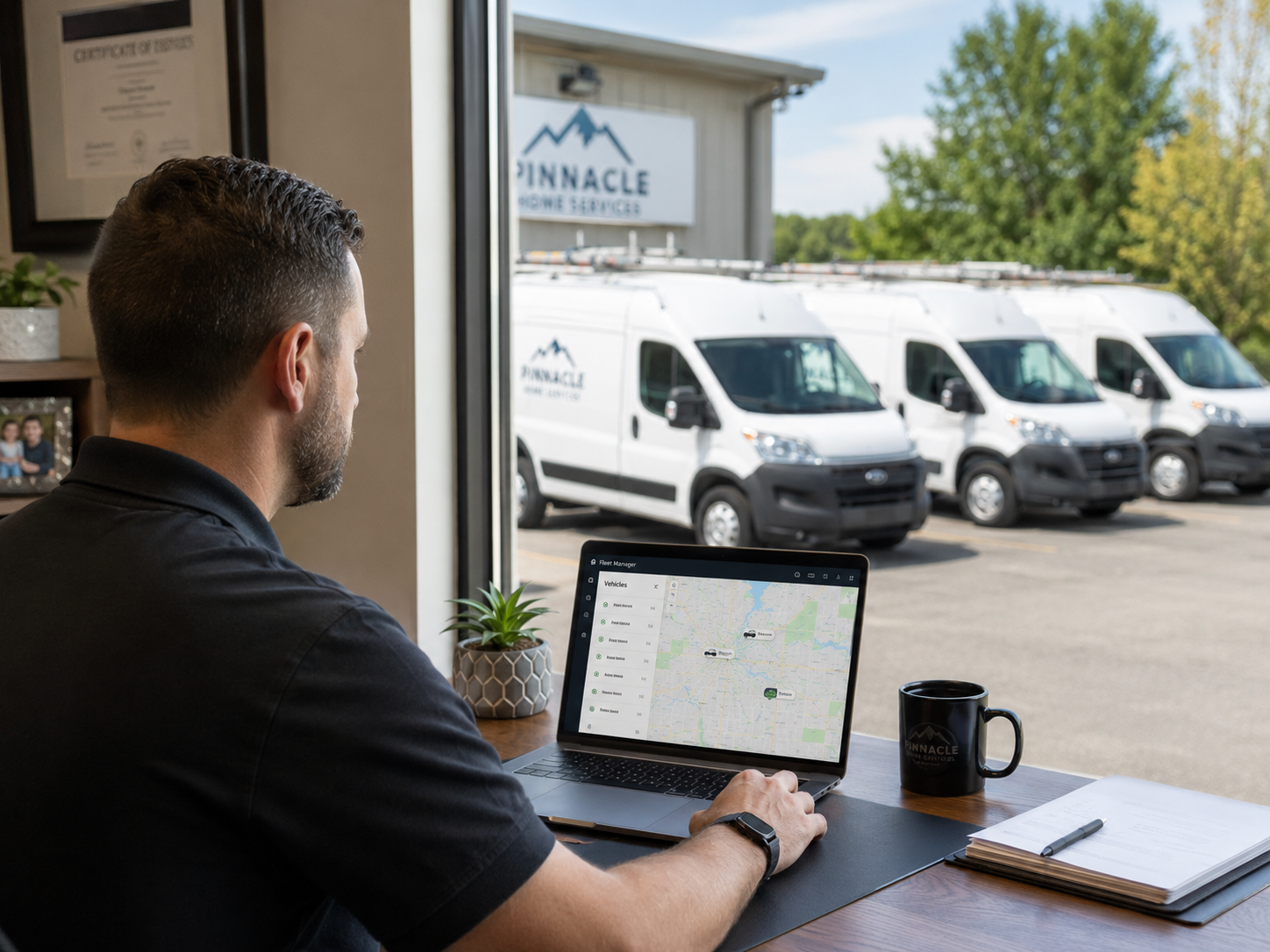
Fleet tracking software helps business owners see vehicles, routes, and alerts in one place.
Best Options at a Glance
The best fleet tracking software depends on fleet size, budget, compliance needs, and how much reporting your team will actually use. A five-vehicle service company should not shop like a 200 truck carrier. Start with the daily problem, then pick the tool.
| Option | Best For | Main Strength | Small Business Fit | Pricing Note |
|---|---|---|---|---|
| SpaceHawkGPS | Simple small fleet tracking | Magnetic GPS tracker, app tracking, asset use | Strong for basic visibility | Hardware plus subscription |
| Samsara | Larger fleets | Dashcams, integrations, alerts, routing | Powerful but often heavy | Quote based, advanced plans cost more |
| Geotab | Data-focused fleets | Analytics, telematics, marketplace tools | Better for teams that use reports | Reseller based pricing |
| Verizon Connect | Enterprise routing | Dispatch, compliance, driver scorecards | Best for larger operations | Usually quote based |
| Motive | Regulated fleets | ELD, safety, dashcams, workflows | Useful for trucking and compliance | Contract terms matter |
| GPSTrackit | First-time users | Tracking, reporting, training | Friendly for beginners | Check plan limits |
| Azuga | Driver coaching | Alerts, driver scoring, rewards | Good for safety programs | Contract length can matter |
Industry comparison reports group 2026 fleet management providers by use case, including integrations, analytics, beginner-friendly tools, safety, and compliance needs. Several fleet management software providers, including Geotab, Teletrac Navman, Verizon Connect, Azuga, and Fleetio, serve different business needs. The practical point remains the same: no single fleet platform fits every business.
What Is Fleet Tracking Software?
Fleet tracking software uses GPS location data, cellular service, hardware, and an app or web dashboard to show where business vehicles and assets are. GPS is a U.S. owned utility that delivers positioning, navigation, and timing services.
Fleet software turns that signal into business information. Owners can see route history, job site arrivals, speeding alerts, stop duration, and after hours movement. Advanced systems may also add fuel reports, maintenance, driver scorecards, inspections, dashcams, and dispatch tools.
Best GPS Fleet Tracking Software for Small Fleets
The best GPS fleet tracking software for small fleets should show live location, route history, geofencing, speed alerts, mobile app access, and simple tracker setup. Small teams usually need fast answers more than complex reporting.
When I test a tracker for a small fleet, I check the parts that matter during a real workday:
- How quickly the map updates
- How clearly route history shows stops
- How fast geofence alerts arrive
- How easy the mobile app feels when the office gets busy
- How simple the device is to place or install
A small HVAC company may only need to confirm that three vans reached morning calls, one trailer stayed at the yard, and no truck left after closing. A full enterprise fleet system may solve those problems, but it can also add cost, contracts, and training.
For that lighter use case, the SpaceHawk GPS vehicle tracker page describes real-time location tracking, mobile and desktop access, magnetic mounting, waterproof design, route history, geofence alerts, and fleet vehicle monitoring.

Small fleets often need fast setup, route history, and reliable alerts more than complex enterprise tools.
Best Simple GPS Tracker for Small Fleets: SpaceHawk GPS
SpaceHawk GPS is my simple tracking pick for small fleets because it gives business owners vehicle and asset visibility without a full software rollout. A better description is a GPS tracker for small fleets, trailers, tools, and mobile assets, not a complete fleet management suite.
The magnetic mount makes placement flexible on work vans, trucks, trailers, and equipment. Waterproof housing also helps when the tracker sits outside or under a vehicle. Small businesses that do not need ELD workflows, fuel reports, or dashcam programs can start with a simpler setup and avoid paying for features they will not use.
During a small fleet check, I would test three things before trusting any tracker: map update speed, geofence alert timing, and route history clarity. Those three checks tell you more than a long feature list.

A magnetic GPS tracker can work well for small fleet vehicles, trailers, and mobile assets.
Pros
- Magnetic placement works well for vans, trucks, trailers, and equipment
- A simple setup helps small teams avoid a heavy software rollout
- Asset tracking use makes the tracker practical beyond vehicles
- Strong fit for small fleets that need basic visibility
Cons
- Not a full fleet management suite
- Not an ELD system
- Not built for advanced dispatch, maintenance, or driver safety programs
Best for: contractors, HVAC companies, landscapers, private security teams, small delivery fleets, and owners tracking both vehicles and equipment.
Best Enterprise Fleet Tracking Software
Enterprise fleet tracking software fits companies that need more than dots on a map. Bigger fleets often need compliance tools, routing, dispatch, inspections, dashcams, maintenance records, fuel data, and deeper reporting.
Samsara works well for companies that need connected hardware, AI dashcams, alerts, and integrations. It lists Samsara, Geotab, US Fleet Tracking, GPSTrackit, ATTI, and Motive among its 2026 fleet management software picks across different use cases.
Geotab is stronger for analytics, engine data, marketplace add-ons, and custom reporting. Verizon Connect suits larger operations that need routing, dispatch, and driver scorecards. Motive is useful for regulated fleets that need ELD, safety, dashcams, and driver workflow tools.
Fleet Tracking Software vs Fleet Management Software
Fleet tracking software focuses on location, route history, geofencing, speed alerts, and driver activity. Fleet management software covers a wider operation, including maintenance, dispatch, fuel tracking, inspections, driver scorecards, compliance, and analytics.
A landscaping business may only need a tracker on trucks, trailers, and generators. A trucking company may need ELD support, hours of service records, DVIR workflows, inspections, and dispatch tools.
The ELD detail matters as it explains that an electronic logging device synchronizes with a vehicle engine to automatically record driving time for hours of service records. A basic GPS tracker should not be described as an ELD unless it performs that compliance function.
Features Small Businesses Should Check First
- Live location: Shows where each vehicle is during business hours.
- Route history: Confirms job site visits, routes, stops, and travel time.
- Geofencing: Sends alerts when a vehicle enters or leaves a yard, customer site, or storage lot.
- Speed alerts: Flags risky driving before it turns into a bigger problem.
- Mobile app access: Helps owners check vehicles away from the office.
- Asset tracking: Protects trailers, generators, tools, containers, and equipment.
- Reports: Give managers proof for customer complaints, payroll questions, or overtime checks.
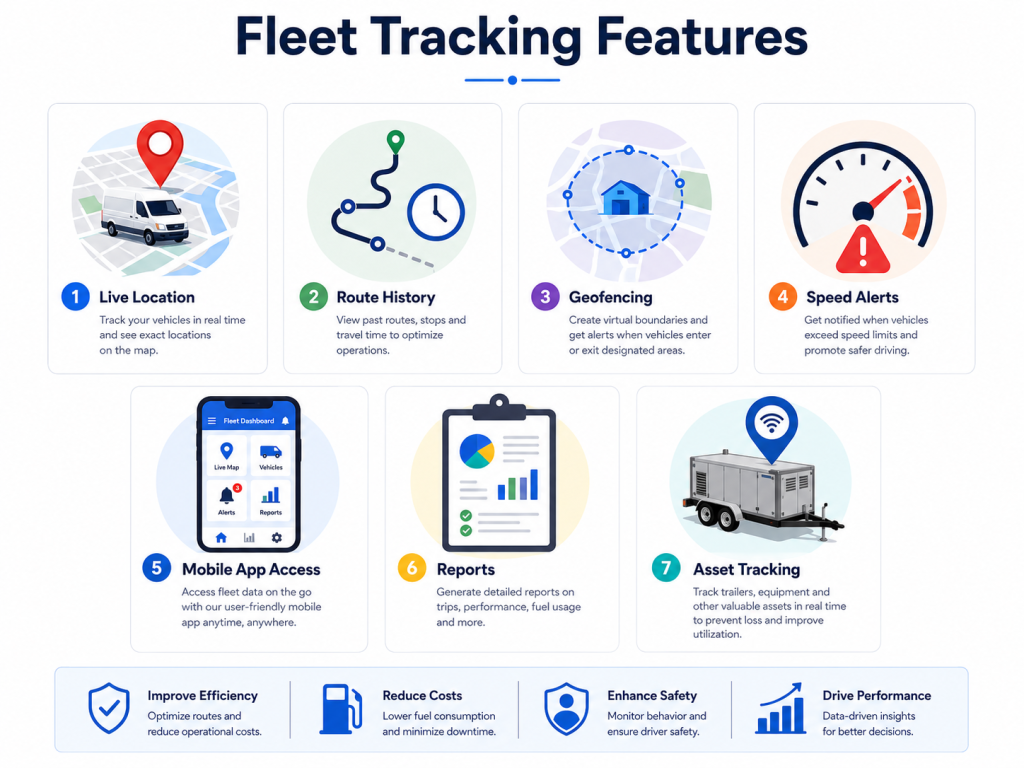
The best feature set depends on what your fleet loses time, fuel, or money on.
How Much Does Fleet Tracking Software Cost?
Fleet tracking software cost depends on hardware, monthly service, activation fees, installation, contract length, support, and advanced features. Some of the reports that basic real-time tracking subscriptions often range from about $15 to $25 per vehicle per month, while plans with AI dashcams, ELD compliance, and advanced diagnostics often cost about $35 to $60 or more per vehicle per month.
Compare the first-year cost, not only the monthly number. A $20 monthly plan can look affordable until hardware, activation, installation, taxes, support fees, and cancellation terms are added.
Ask these before signing:
- What do I pay today?
- What do I pay every month?
- Is hardware included or separate?
- Do I need professional installation?
- Does the contract renew automatically?
- What happens if I cancel early?
- Are support, app access, and alerts included?
Small businesses should avoid paying for compliance, dashcams, fuel reporting, and enterprise analytics unless those features solve a real business problem.
How Fleet Tracking Saves Money
Fleet tracking saves money by reducing fuel waste, idle time, unauthorized vehicle use, theft risk, overtime disputes, and bad dispatch decisions.
A contractor might notice one truck idling 40 minutes before the first job every morning. Without route history, the owner only has a hunch. With GPS reports, the pattern becomes visible. One clear conversation can cut wasted fuel and paid downtime.
Dispatching also improves. When an emergency job comes in, the office can send the closest vehicle instead of calling three drivers. Geofence alerts can show when a truck leaves the yard after hours. Speed alerts can help reduce risky habits that burn fuel and create liability.
Privacy and Legal Notes
Fleet tracking works best when employees know which company vehicles are tracked and why the business collects location data. A simple written policy should explain what data is collected, who can view it, and how the company uses it.
Company vehicles, work trailers, and business equipment are easier to manage than personal vehicles. Personal vehicle tracking needs clear consent and careful handling.
Local employment and privacy laws can vary, so businesses should check state rules before tracking drivers.
How to Choose the Right Fleet Tracking Software
Choose simple GPS tracking when the main need is vehicle location, route history, geofencing, speed alerts, and asset protection.
Choose full fleet management software when the business needs dispatch, ELD support, dashcams, maintenance scheduling, fuel reporting, inspections, and driver scorecards.
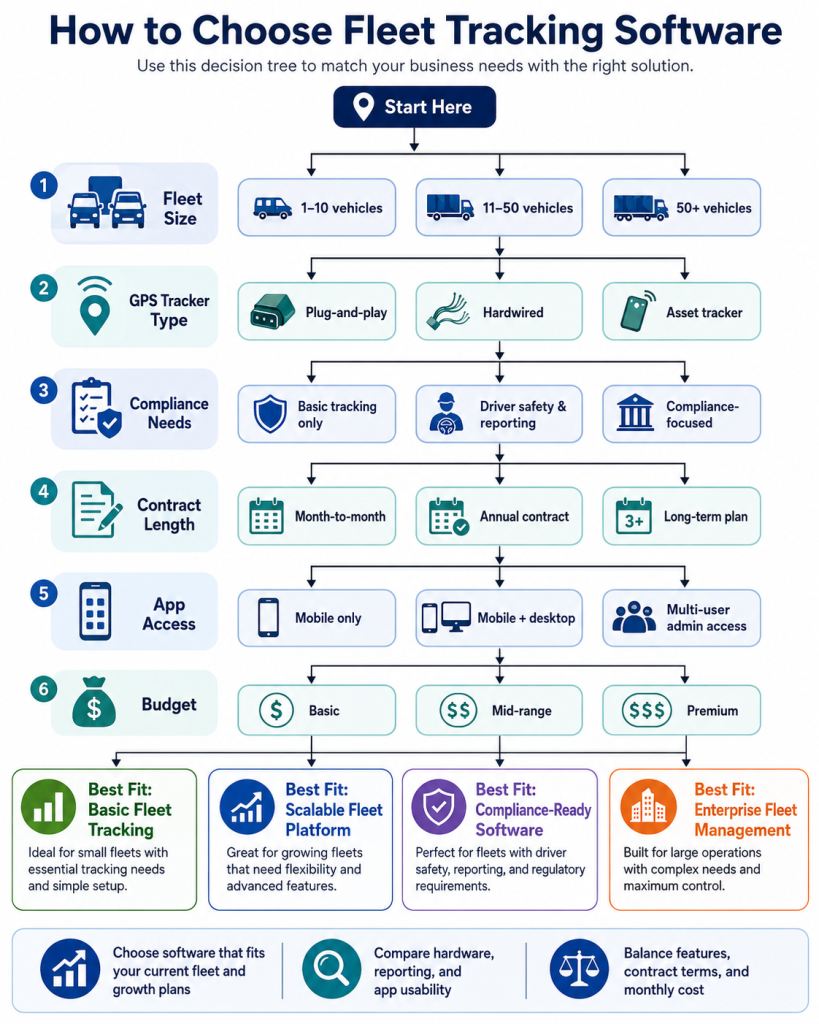
Choose the tool around your fleet problem, not the longest feature list.
Use this buying checklist:
- Match the tool to fleet size.
- Confirm tracker type: OBD, hardwired, battery, or magnetic.
- Check update speed and alert settings.
- Test the mobile app before buying.
- Review contract length and cancellation terms.
- Compare the first-year cost.
- Avoid paying for features nobody will use.
The best choice is the tool that solves the current problem without creating a new software burden.
Conclusion
The best fleet tracking software depends on fleet size, budget, contract terms, and the level of control the business needs. Large fleets may need Samsara, Geotab, Verizon Connect, or Motive for compliance, safety, dispatch, maintenance, dashcams, and deeper reporting.
Small businesses can often start with live location, route history, geofencing, speed alerts, and asset tracking. SpaceHawk GPS fits that simpler lane for work vehicles, trailers, equipment, and mobile assets when the goal is visibility without a heavy rollout.
FAQs
What is the best fleet tracking software for small businesses?
The best fleet tracking software for small businesses depends on fleet size and feature needs. Small teams usually need live GPS tracking, route history, geofencing, alerts, and easy mobile access before they need enterprise tools.
Is GPS fleet tracking worth it?
GPS fleet tracking is worth it when vehicle location, theft risk, driver accountability, fuel waste, or arrival proof affects daily work. Even a small fleet can benefit when managers stop guessing where vehicles are.
Do I need fleet management software or a GPS tracker?
You need fleet management software for dispatch, compliance, maintenance, fuel reports, and safety programs. A GPS tracker is enough when the main need is location tracking, route history, geofencing, alerts, and asset protection.
Can fleet tracking software track equipment?
Many GPS tracking systems can track trailers, containers, tools, and construction equipment. Asset tracking works best when the device supports outdoor use, flexible placement, and long parking periods.